
Liz Westhouse

Revolution Team
December 29, 2025
5 min read
This year, we broke up our Beyond Silicon Valley Summit into a series across the D.C. metro region, each event anchored in content, collaboration, and community.
Across four conversations on fast-evolving topics—women’s sports, climate tech, defense tech, and AI and the future of work—a few throughlines surfaced. First, adoption tends to matter more than attention; second, economics still decide outcomes; and third (a Rise of the Rest special), place shapes advantage.
The series also reinforced the value of partnership and proximity, with founders, investors, and institutions showing up together to move ideas forward. Below are the thoughts that stayed with us, the data behind them, and how we’re thinking about 2026.
Women’s Sports: From Momentum to Build-Out

The women’s sports conversation has matured. The debate is no longer whether the category is viable, but who captures long-term value. The panel we assembled (Ariel Project Level General Counsel Emma Rodriquez-Ayala, Washington Spirit CEO Kim Stone, and 125 Ventures Managing Partner Lorine Pendleton) agreed that media rights, ownership models, and physical infrastructure now matter more than novelty.
According to Deloitte, Global elite women’s sports revenues are projected to have surpassed $2.3B in 2025, driven largely by sponsorship and media rights growth. But tailwinds abound: women’s sports fans skew younger, more engaged, and more responsive to athlete‑led influence, with audiences nearly three times more likely to purchase products endorsed by female athletes.
Our 2026 take: Team valuations will increasingly diverge based on control of infrastructure and media distribution, not league affiliation alone.
Climate Tech: Where Economics Decide Outcomes
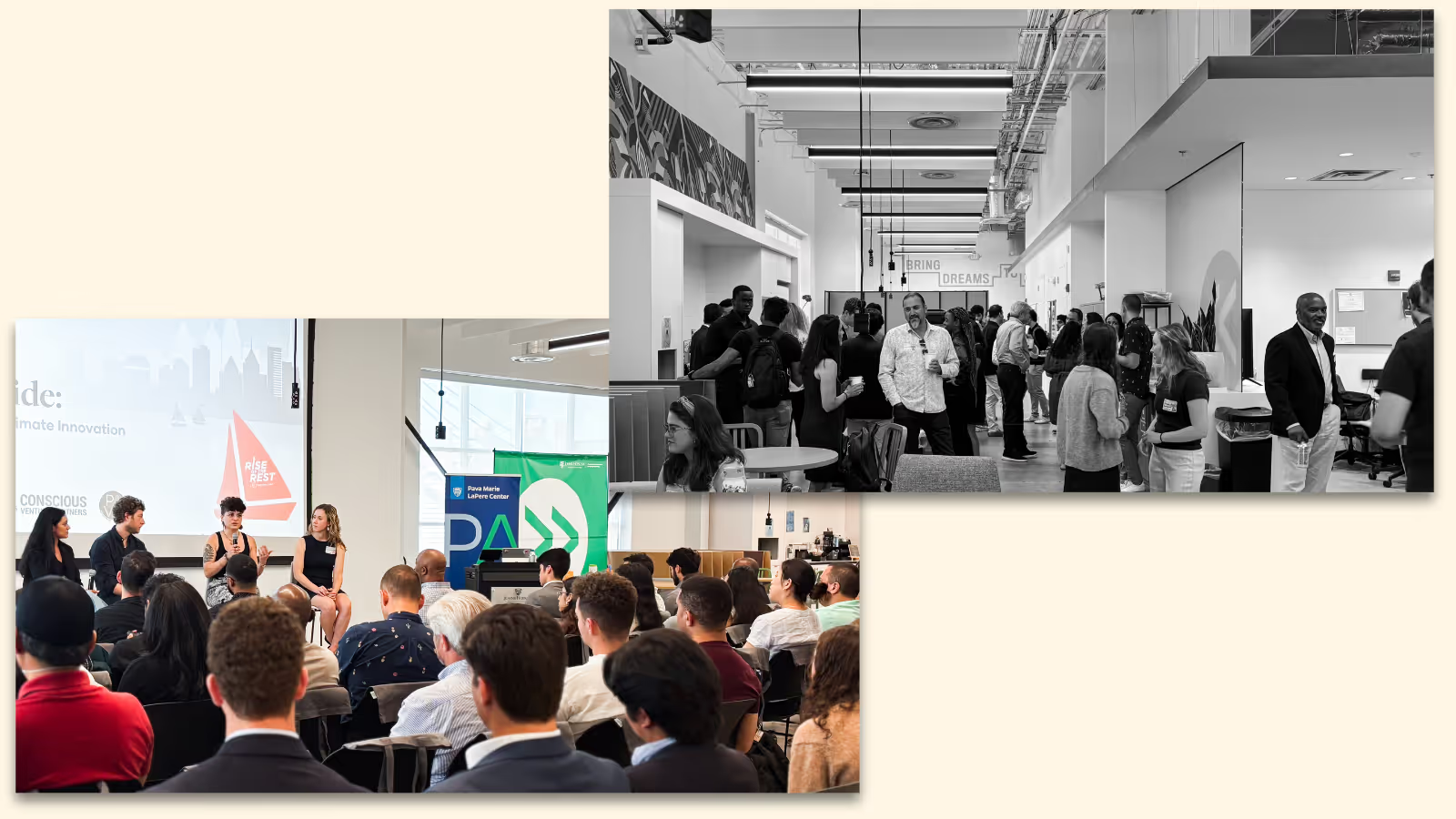
Climate innovation remains urgent, but urgency alone doesn’t close deals. Based on the candor we heard in Baltimore (from former J.P. Morgan Executive Director, Climate Tech Ellen Pizzuto, SunFunder co-founder and Mirova Advisor Ryan Levinson, and Carbon Reform CEO Jo Norris), the founders gaining traction are the ones selling savings, reliability, and regulatory resilience.
But capital remains constrained. According to SVB’s Future of Climate Tech report, 57% of U.S. VC‑backed climate startups will need to raise within the next year. At the same time, burn rates are declining and early‑stage investment has stabilized, suggesting a healthier, more disciplined market.
Electrification is a clear near‑term driver. The U.S. Energy Information Administration projects renewables will generate nearly half of U.S. electricity by 2030, creating downstream demand across grid tech, storage, retrofits, and building efficiency—especially in regions like Baltimore and Philadelphia where proximity to customers, infrastructure, and regulators shortens the path from pilot to scale.
Our 2026 take: In sales and fundraising pitch decks, climate companies will lead with performance, with climate impact embedded.
Defense Tech: Scaling National Security Innovation

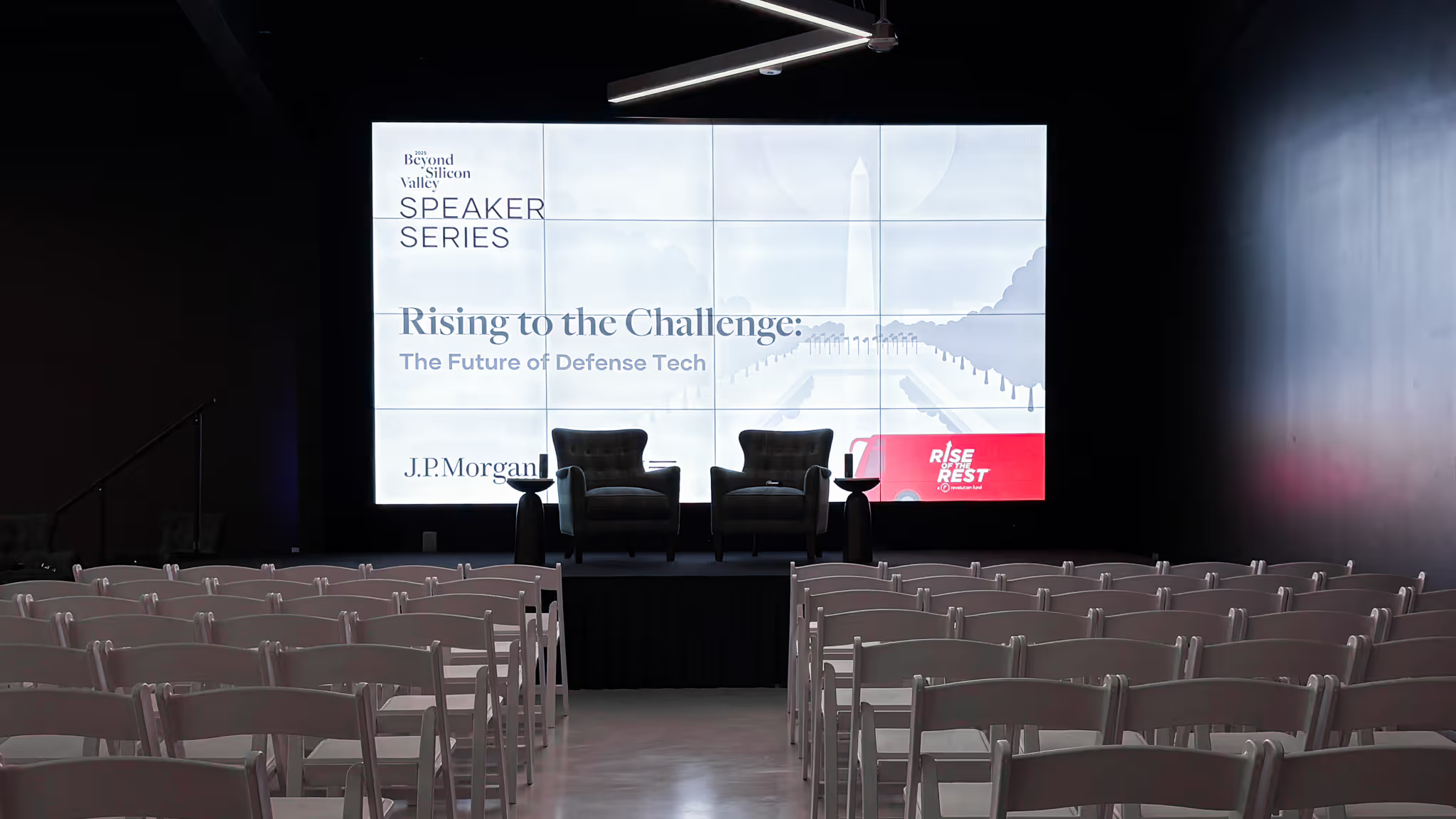
Something we heard a few different ways at our event at STATION DC (during a fireside between Steve Case and Former Secretary of Defense Mark Esper and a panel featuring Forterra CEO Josh Araujo, Govini CEO Tara Murphy Dougherty, and Squadra Ventures Managing Partner Guy Filippelli): Defense tech isn’t short on innovation; it’s short on pathways from prototype to deployment.
In 2025, investors poured more than $48B into defense startups, producing nearly a dozen new unicorns in the category. McKinsey estimates the broader defense tech market could reach $250B as AI, autonomy, and dual‑use platforms scale.
The differentiator is credibility—alignment with real government needs, durable partnerships with primes, and the patience to build through long procurement cycles. Dual-use can be effective, but only when it’s part of the core strategy, not window dressing. And D.C., where policy, procurement, capital, and customers all live in the same ecosystem, has a structural advantage.
Our 2026 take: Defense tech valuations will increasingly reward companies that show repeatable adoption, not just technical superiority.
AI and the Future of Work: From Tools to Collaboration

AI’s impact on work is already visible. AI‑native job postings are up nearly 700% year‑over‑year, with teams iterating faster as expectations accelerate.
As our panelists (Ardent Venture Partners Managing Partner Phil Bronner, BuildWithin CEO Dr. Ximena Gates, and Cooley Partner Adam Ruttenberg) contended, the strongest operators aren’t rebuilding from scratch. They’re modernizing from where they are: upgrading workflows, rethinking talent systems, and pairing domain expertise with applied AI. Legal and operational ambiguity remain a real challenge, but that volatility is now a core design constraint, not a reason to wait.
Our 2026 take: The AI advantage will belong to teams that redesign operations before they redesign products.
Looking Ahead
The next phase of innovation favors builders who can execute amid capital scarcity, regulatory complexity, and real‑world adoption. That’s where Rise of the Rest has always focused, and it’s where we think the most interesting work will happen next.
A special thank you to our partners at Halcyon and Halcyon Venture Partners, J.P. Morgan, Conscious Venture Partners, the Johns Hopkins Pava Center for Entrepreneurship, STATION DC, Cooley, and Amazon, who helped make this series possible.
.svg)