
Steve Case

Revolution Team
April 13, 2017
3 min
There are a lot of reasons to admire Silicon Valley. The land that just a half century ago was primarily fruit orchards is now a hotbed of ideas and innovation. Many people often speculate as to what has made — and continues to make — this area such a magnet for talent, capital, and technological progress. There are myriad answers to that question, but I have come to believe that the most important explanation of Silicon Valley’s success is a culture that values being fearless and taking risks. In many parts of America (including Hawaii, where I’m from), if you fail, you are a failure. Not so in Silicon Valley, where failure is understood to be a part of the innovation cycle.
This is not a new idea; more than a century ago, one of America’s greatest inventors, Thomas Edison, famously said “I have not failed — I’ve just found 10,000 ways that don’t work”. That is a mindset we need to promote all across the country, as we seek to level the playing field so everybody, everywhere has a shot at the American Dream. And it’s also a mindset that we need to encourage in Washington D.C., if we are going to remain the most entrepreneurial nation in the world.
Last week, I joined investors and legislators at Majority Leader Kevin McCarthy’s office in the U.S. Capitol to celebrate the 5th anniversary of the JOBS Act, bipartisan legislation that updated securities laws that hadn’t changed in 80 years. The JOBS Act legalized equity and debt crowdfunding, to help get capital to more entrepreneurs in more places, and led to an entrepreneur-friendly IPO on-ramp. It’s goal was to help promote and encourage startup growth, and it was an important step forward — but, five years later, it’s clear there is still a lot of work to do. For example, the crowdfunding rules are complex and burdensome, limiting their effectiveness. Regulators understandably wanted to limit abuses and keep bad things from happening, but ended up tilting the balance against enabling enough good things to happen.
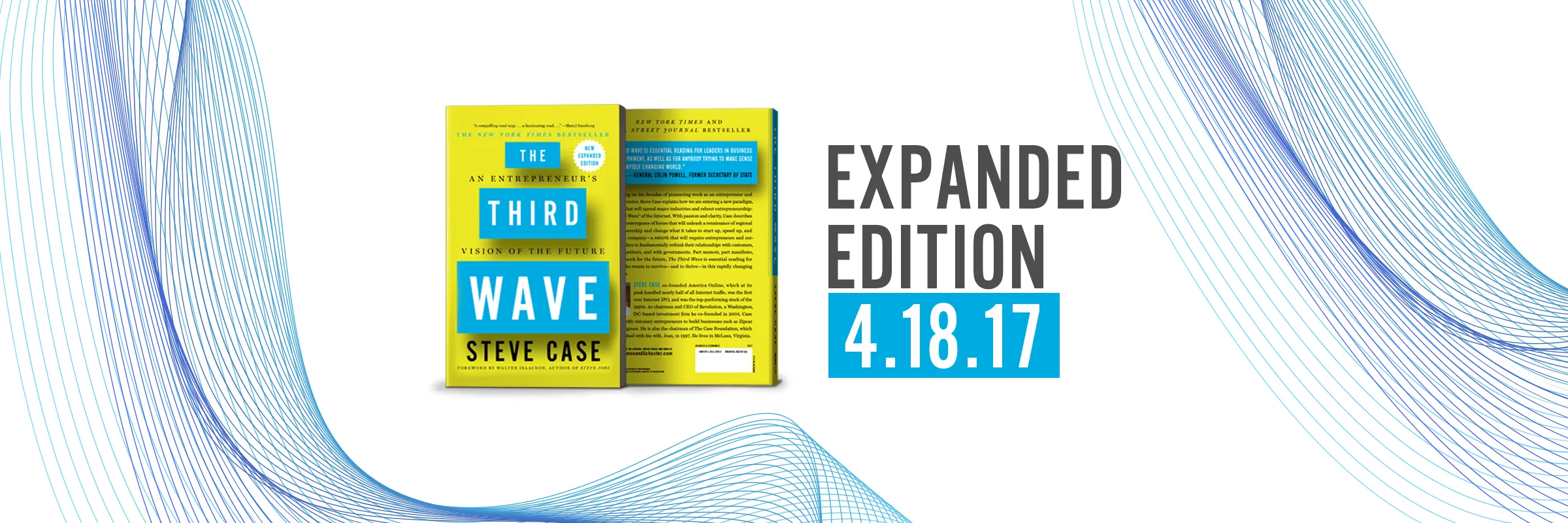
The need to strike the right balance in terms of innovation policy is a key theme of the paperback version of my book The Third Wave: An Entrepreneur’s Vision of the Future, which will be released next week. I added a lot of new content, including a new chapter I wrote following the election of President Trump. In it I outlined seven steps we need to take, to empower a new generation of entrepreneurs, help the U.S. cities that have been left behind rise again, and maximize the likelihood of American leadership in the Third Wave. The new chapter outlines how the government, corporations, and communities can work together to create tax incentives, talent recruitment efforts and supplier pipelines that help launch and scale the next wave of businesses that will transform our lives.
It will not be easy to get these ideas enacted — particularly in an increasingly partisan and gridlocked Washington D.C. But we have to, otherwise America will lose its lead. And, while I am not naïve about the complexities, my experience working on the JOBS Act gives me reason to be hopeful.
When we first started pushing the JOBS Act legislation, people told us to forget about it. In an election year, amidst great partisan strife, we would surely be ignored. There were a lot of skeptics who said we were wasting our time. But the law passed, with broad support from both sides of the aisle. And I remembered all those naysayers on April 5, 2012, when President Obama signed the bill into law in the White House Rose Garden.
So let’s start the process once again of working together to put pro-startup policies in place. I am hopeful that the release of the new edition of The Third Wave will serve as a catalyst to jumpstart that process. And I stand ready to do what I can to turn the seven ideas into action.
.svg)