

Revolution Team
May 26, 2026
4 min
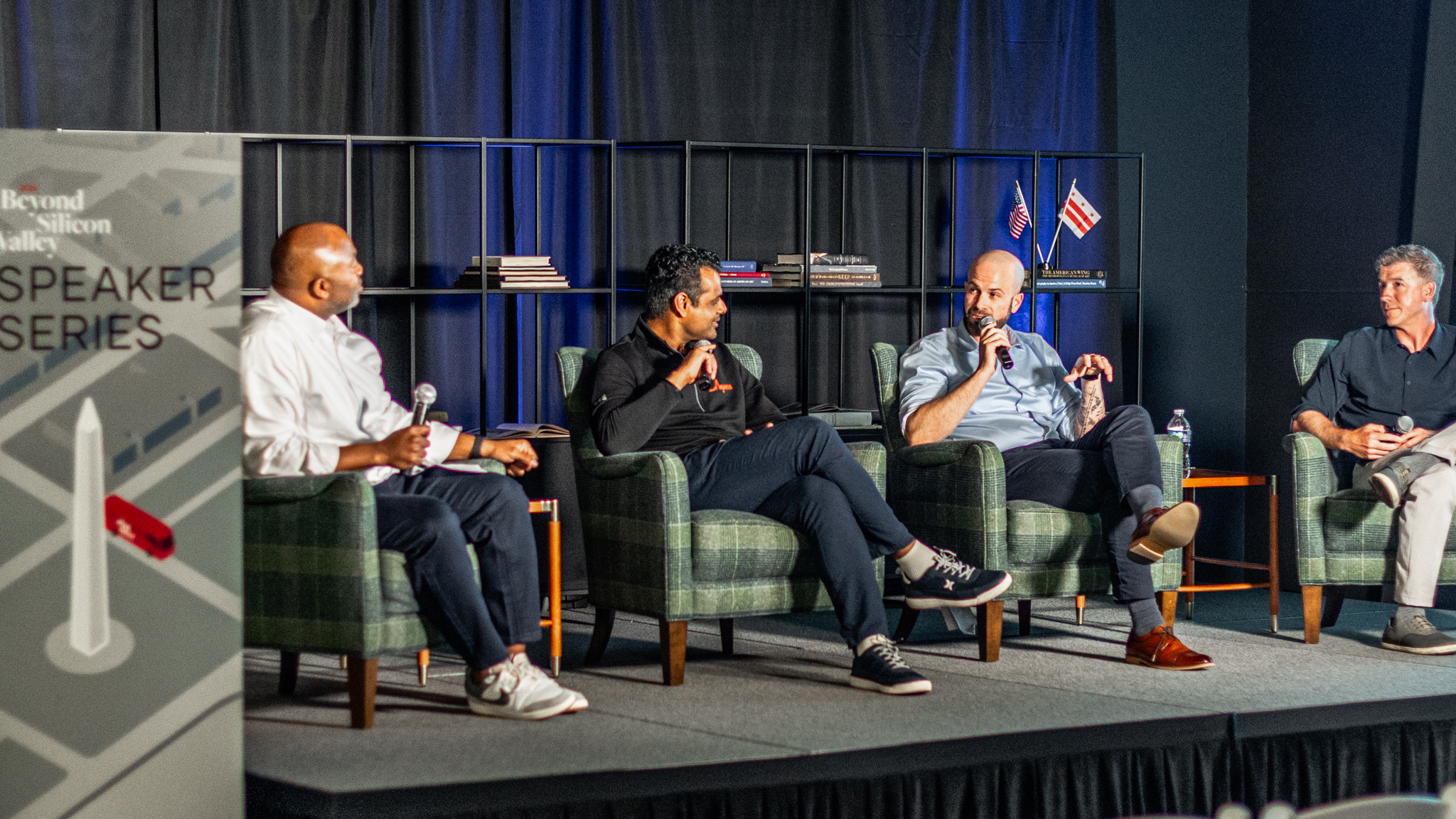
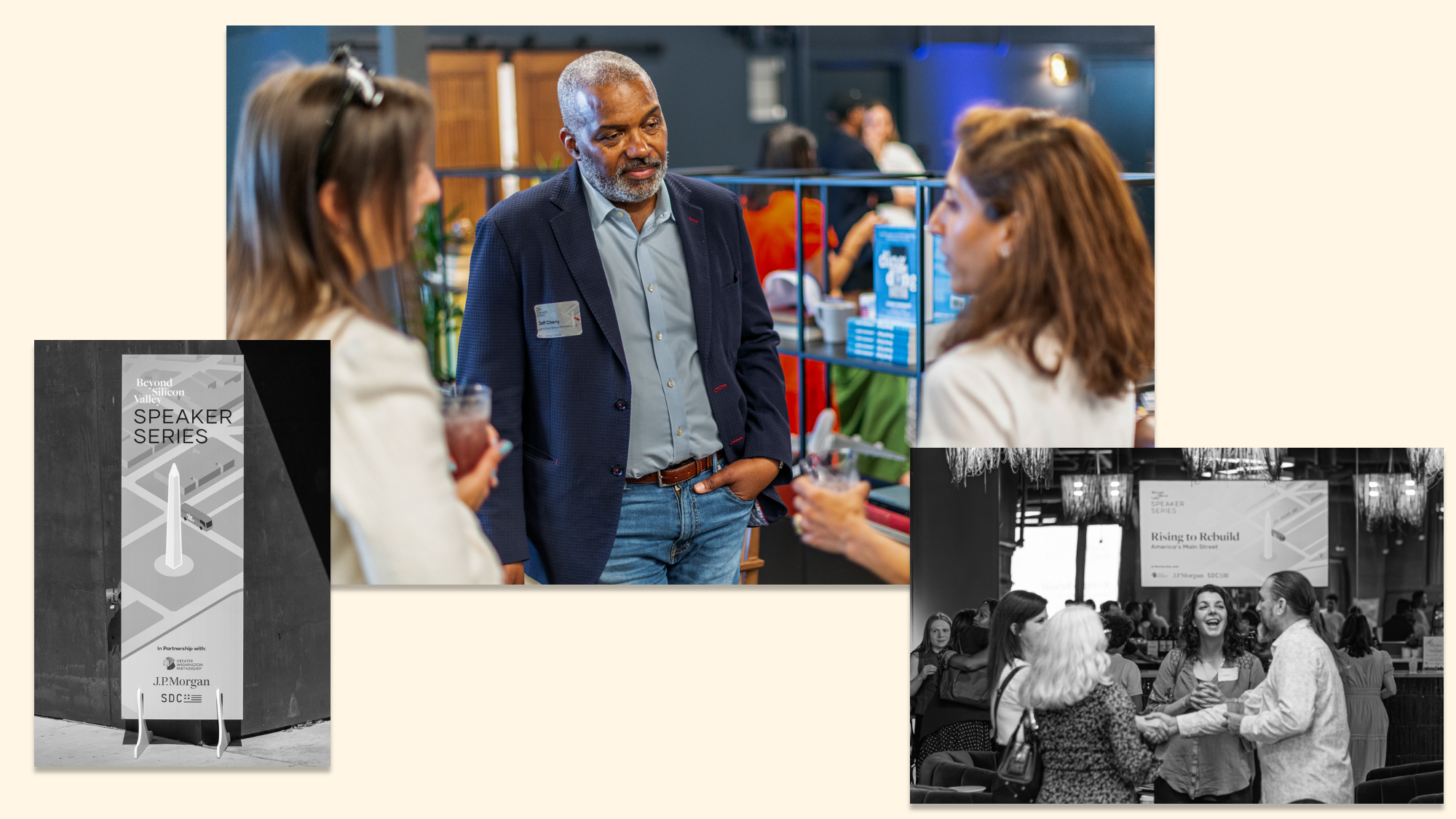
For the latest in our Beyond Silicon Valley series, we headed back to STATION DC, located in the city’s Union Market District—a fitting backdrop for exploring how cities are reimagining neighborhoods and their use cases for the future.
If you live in D.C., you know Union Market. What started as an industrial neighborhood has become one of the city's more dynamic food and design districts over the last decade, expanding into a self-contained stretch that covers most of what you'd need in a given week.
We covered a lot of ground in our discussion of real estate, infrastructure, and the physical and social nodes that draw people in and keep communities connected. On those nodes, Kathy Hollinger, CEO of the Greater Washington Partnership, set the scene.
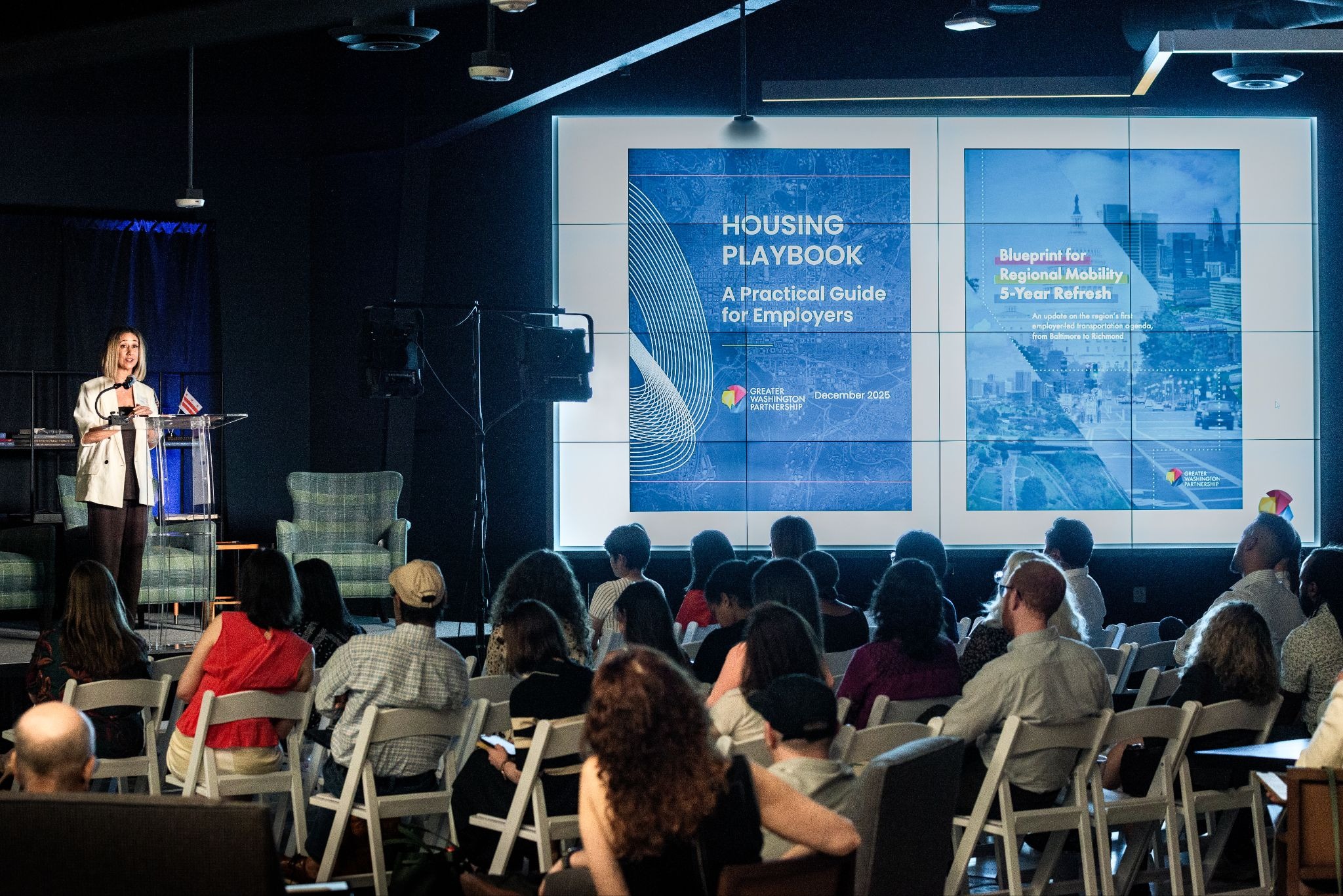
The Richmond-to-Baltimore corridor is the 8th largest economy in the world and 4th in the U.S., and GWP's work is centered on connecting the dots. "Collaboration is talked about a lot”, she said, “but I don't think people know how to practice it." GWP works on that practice, assembling a CEO-led alliance to get the region rowing in the same direction. By 2040, the difference between a well-coordinated Greater Washington and a disparate one could represent more than half a million jobs.
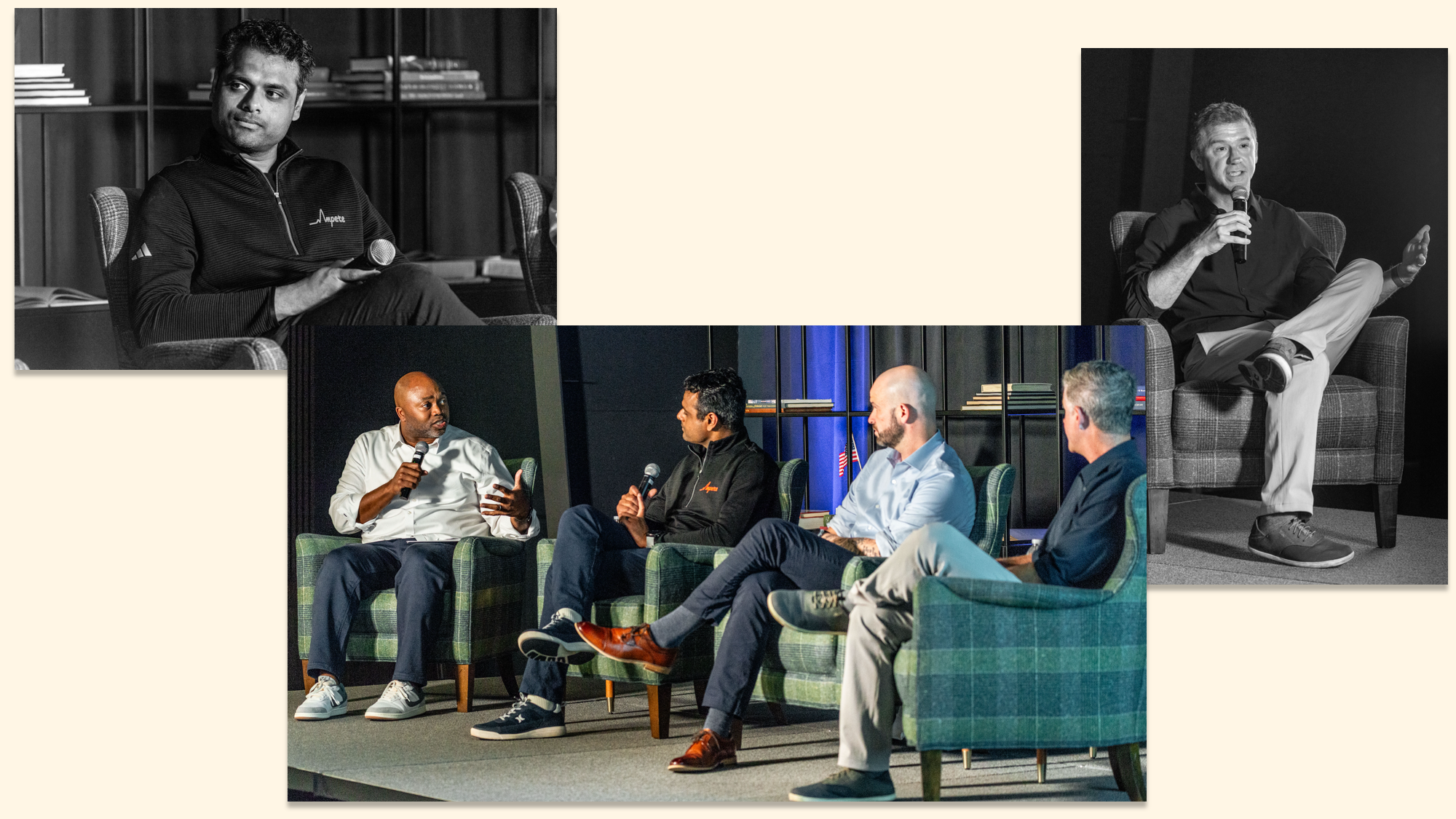
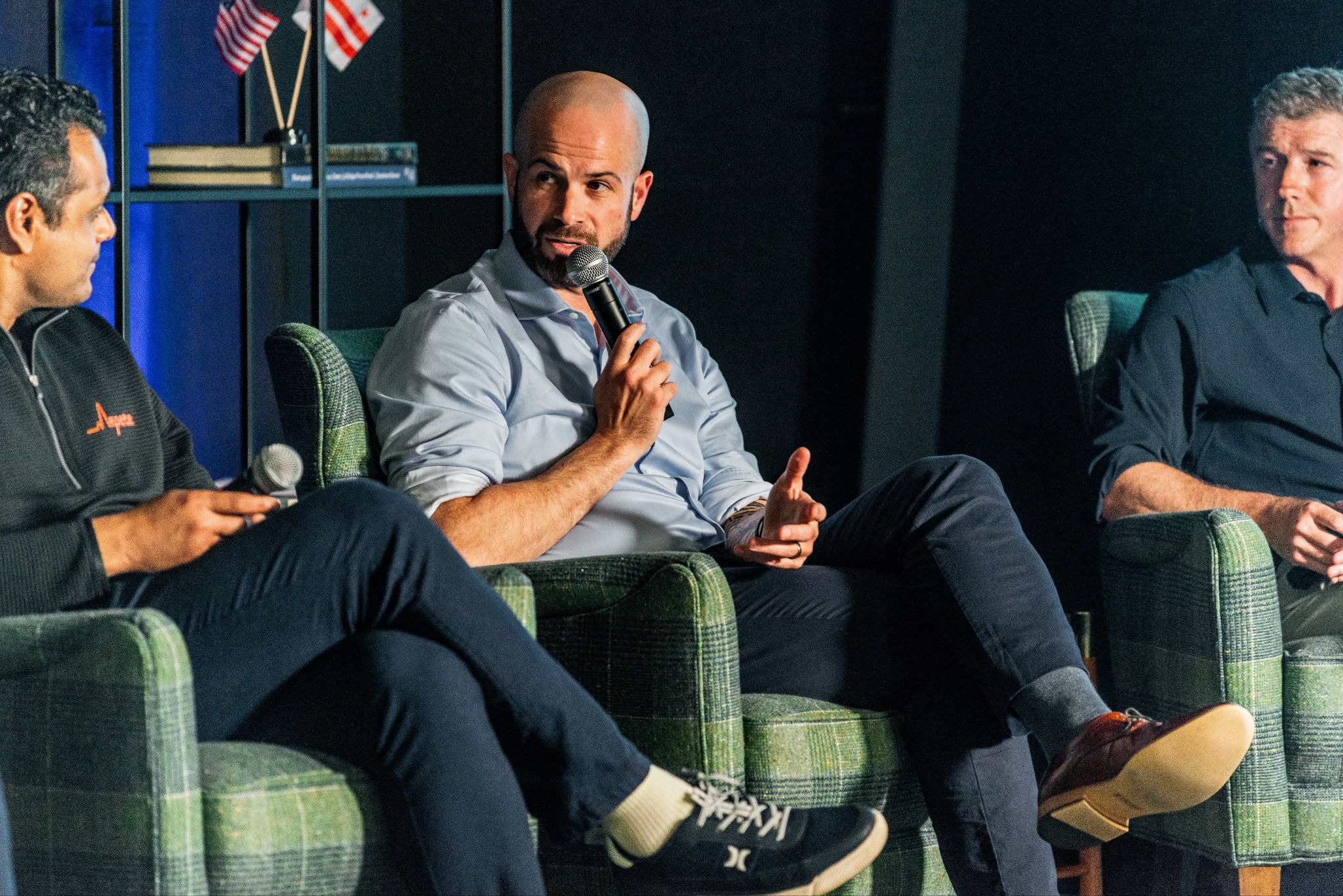
From there, the conversation turned to those building and investing in the physical infrastructure of cities, including Jason Fudin, Co-founder and CEO of Placemakr; Krishna Matturi, Co-founder and Head of Product at Ampere; and Clint Myers, Partner at Rise of the Rest Real Estate.
What's Old Becomes the Best Version of New
Myers's read on what makes a neighborhood work is, in part, a function of building age. "New ideas require old buildings," he said. "It's harder to take a chance in a new building." Older buildings with lower rents and more flexible spaces, on the other hand, are where new ideas have more wiggle room to start, experiment, and eventually scale.
Myers’s three-pronged investment criteria: Is a city affordable, smart, and fun? Many are two out of the three, and he looks for places that already have some momentum and figures out who's building there. Other neighborhood-level signals he looks to are stroller shops and rideshare traffic patterns, both indicators of who a place is pulling and where it's headed.
Fudin frames his team’s work at Placemakr similarly. He's in the business of rebalancing where people spend time and money rather than creating demand from scratch. On housing, he, like others, sees the biggest opportunity in building more density on single-family lots. The ideal would be moving from one unit to two, four, or more, but that runs into resistance almost everywhere it’s proposed.
Both noted old zoning rules as an impediment, which tend to make it easy to build a single-family home or a 300-unit apartment building, and hard to build anything in between. They believe that the missing middle of duplexes, small mixed-use buildings, and medium-density housing is where desirable affordable living and neighborhood character comes from.
Infrastructure Is the Long Game
Matturi works at the intersection of AI and energy infrastructure, and his read is that most cities are behind on both. Northern Virginia's data center dominance traces back to infrastructure investments made decades ago. The cities that want to attract the next wave of economic activity need to be making those bets now, and using data to drive placemaking decisions. Though those decisions come with tradeoffs, as the debates around large-scale data center buildouts make clear.
On AI's broader impact, Matturi is optimistic. He foresees AI generating more interesting and less repetitive jobs for tomorrow’s workforce. Artists and creatives play a vital role in any city that’s found its footing, building culture and vibrancy that broader economic growth follows. Infrastructure is what makes that sequence possible in the first place.
On how AI will reshape our economic and physical realities, Fudin didn't sugarcoat anything. "I think a lot of things are going to break in our cities. It'll get worse before it gets better."
The Durability of Physical Assets
All three noted that generally, the real estate market has slowed, but it also has staying power. The underlying mismatch between housing supply and demand isn't going away, and physical assets hold up even as AI reshapes the broader economy.
For those reasons, New York remains a strong money-making market because it’s where constraint is highest. If you're already in, you've got built-in demand and pricing leverage. Fudin noted that Nashville, Austin, and Denver, on the other hand, got overbuilt during the pandemic and are working through inventory, and that Texas metros keep growing because of space, light regulation, and capital.
On office-to-residential conversion, Fudin’s view is that the math works when someone changes the underlying economics, and policy is the lever. But ultimately, “people don’t want to live in offices.”
Sentiment Spillover
Perception is one of the less quantifiable forces shaping how cities grow. But Myers has seen that if enough people are talking about a place as cool, it starts to become cool. Pop culture is one of the more powerful drivers of sentiment, and it cuts both ways.
Some cities have benefited from the stories told about them. Think of how Cheers embedded Boston into the American imagination, how Friends and Seinfeld made New York feel like the center of the universe, or how The Bear reinforced Chicago's identity as a serious food city. Others have had to work against narratives that outlasted the realities they depicted. The Wire shaped perceptions of Baltimore that the city has been pushing back against for decades, even as the reality on the ground has progressed considerably.
Local government, developers, and community leaders can't write the scripts, but through policy and communication, they can shape the conditions that give a city's story a better chance of being a net positive. Getting that right, alongside zoning reform, infrastructure modernization, and coordination, creates benefits that only compound over time.
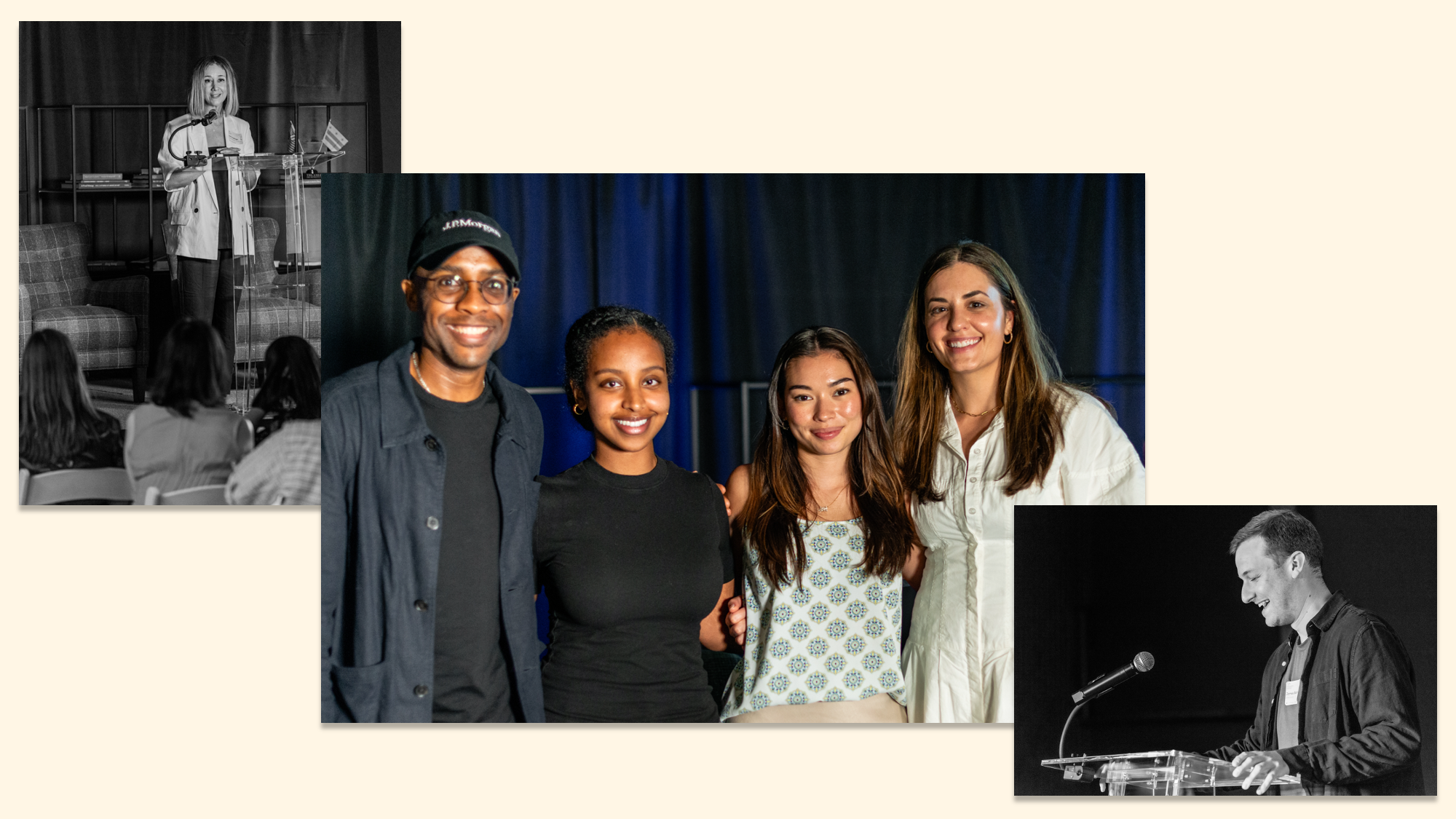
Shoutout to our partners STATION DC, Greater Washington Partnership, and J.P. Morgan for helping make the event happen!
.svg)