


Revolution Team
July 10, 2024
3 min read
Insights and soundbites from this June’s StrictlyVC in D.C. event
TechCrunch’s StrictlyVC roadtrip made its way to D.C. this June, and Revolution was proud to co-host an evening of fireside chats and networking with the capital’s venture and startup crowd.
We may be a smaller community than Silicon Valley or New York, but D.C. is a critically important one when it comes to helping startups and innovators navigate choppy regulatory waters. Emceed by TechCrunch’s Editor-in-Chief and the founder of StrictlyVC, Connie Loizos, the event featured insights on the future of AI, antitrust, and social media legislation. Read what the lineup of tech policy influencers and enforcers had to say (spoiler: our CEO led the pack) and what we think were the most salient soundbites.

The conversation: Policy, place, and ensuring the benefits of AI are geographically distributed with Steve Case
The takeaways:
- There are undoubtedly risks with open-source AI, but it’s even more dangerous to allow Big Tech to be the sole proprietor of the most transformative technology of our time.
- To fully leverage AI’s potential in healthcare, agriculture, manufacturing, and other industries ripe for disruption, the technology must be open-source, and cities between the coasts (with regional expertise and specialized talent) must be part of the equation.
The soundbite: “Most of tech looks at policy as a problem, but policy changes can — and have — unleashed opportunity and accelerated growth.”
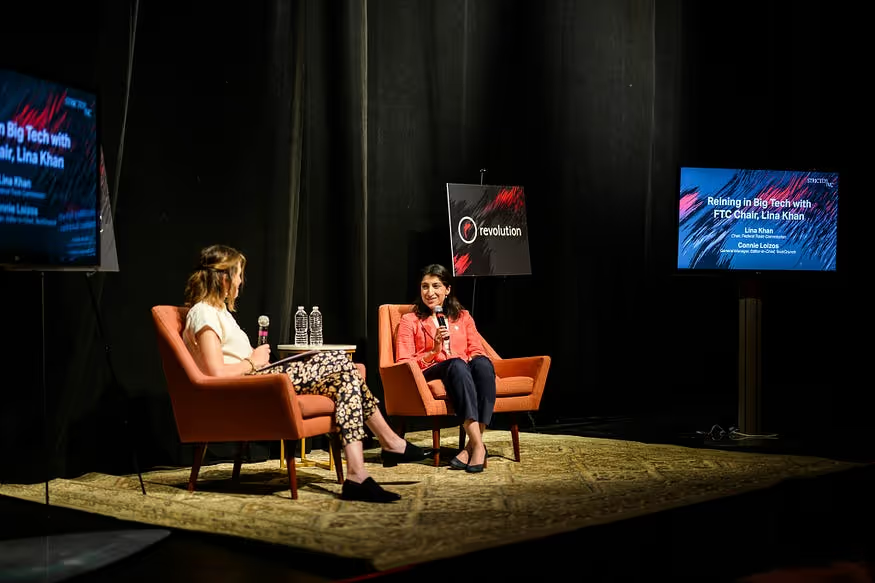
The conversation: Reining in Big Tech with FTC Chair, Lina Khan
The takeaways:
- Case selection strategy also aims to act as a deterrent, shifting antitrust considerations to the forefront of business deals and reducing the need for extensive public resources to challenge them later.
- With AI, the agency aims to preempt the “open first, closed later” dynamics of the first and second wave of the internet.
- America has faced many crossroads where it could have coddled monopolies. We’ve become the most innovative country in the world because we’ve continuously embraced competition.
The soundbite: “A world in which you have a dozen potential acquisition suitors rather than one or two is a better world for startups.”

The conversation: How former OpenAI board member, Helen Toner, is thinking about AI regulation
The takeaways:
- A fragmented landscape of state and local AI regulations risks creating uncertainty for startups and consumers.
- The policy world operates on relationships and trust. Startups and tech companies should view interactions with policymakers as opportunities for productive collaboration, not adversarial fights.
- At the end of the day, a company cannot regulate itself.
The soundbite: “If the only AI laws we get are knee-jerk reactions to big crises, will that be productive?”

The conversation: YC goes to D.C.: Head of Policy, Luther Lowe, on the original accelerator’s policy goals and impact
The takeaways:
- Y Combinator is building its D.C. presence to amplify “Little Tech’s” voice in Congress, where Big Tech has traditionally dominated.
- The organization aims to use its grassroots connections to every congressional district to push for policy changes that promote fair competition, open-source AI, and talent mobility.
The soundbite: “We have to compel the largest gatekeepers to stop self-preferencing and start interoperating.”
.svg)