
Marissa Hopkins Secreto

Revolution Team
August 1, 2024
3 min read
Our biggest takeaways from the inaugural Innovative Capital Summit.
Last week, we attended the Innovative Capital Summit hosted by the U.S. Department of Commerce and the Special Competitive Studies Project (SCSP) in partnership with the National Science Foundation (NSF), Economic Development Administration (EDA) and the Milken Institute. Below are a few highlights from the inaugural convening of the EDA Tech Hubs and NSF Engines, along with private and philanthropic capital.
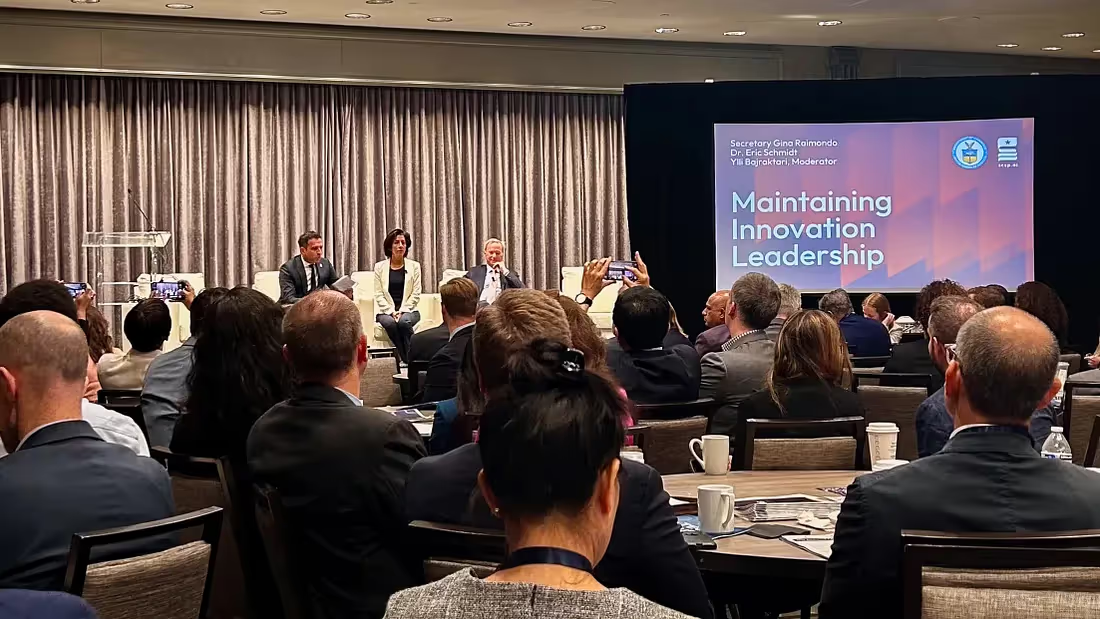
U.S. Secretary of Commerce Gina Raimondo and former Google CEO Eric Schmidt* had a candid conversation about what it’s going to take for the U.S. innovation economy to remain globally competitive. Takeaways included:
- By collaborating with the private sector to supercharge investment, the government can create conditions that allow America to remain the most innovative and entrepreneurial nation in the world.
- Tech Hubs tap into the innovative power of the whole country, not just the typical coastal centers. A more dispersed tech landscape will be key to building the technologies of the future and enhancing U.S. economic growth and national security.
- America will face challenges in maintaining its artificial intelligence lead as the technology continues to proliferate and advance. Schmidt highlighted the SCSP’s recent report, which lays out a vision for public and private sector collaboration to secure our future.
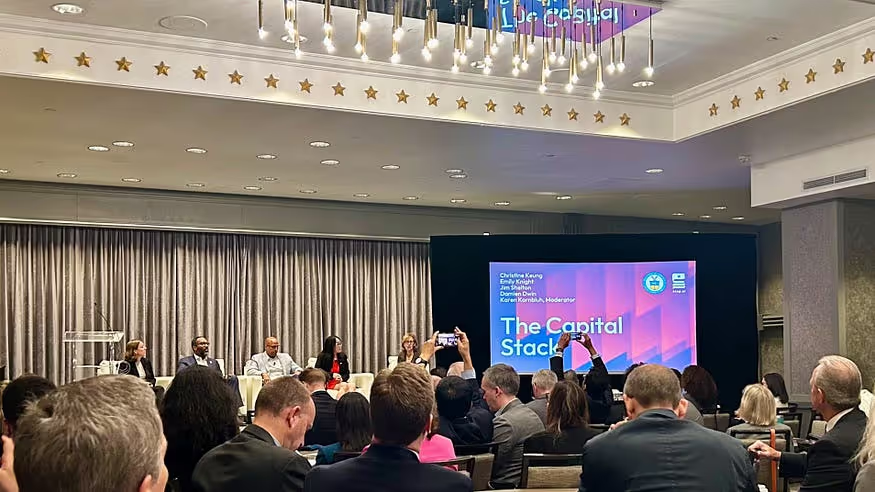
The themes shared by speakers and panelists throughout the day echoed what we believe at Revolution: Geographic diversity is a benefit, not a bug. These regional hubs are places that already have the expertise and excellence around a specific technology focus — quantum in Colorado, biologics manufacturing in Indiana, and personalized medicine in Wisconsin, just to name a few. The vision is that, with government funding and continued private investment, these communities can become cutting-edge hubs on a global stage.
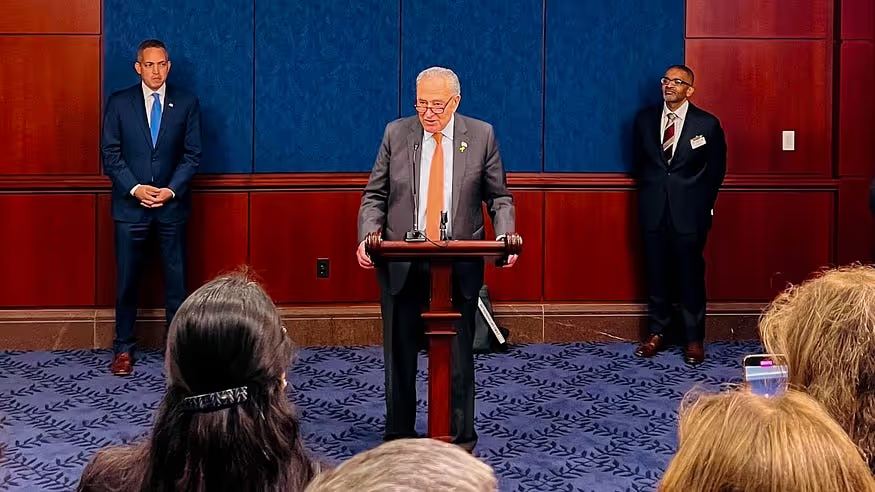
The day wrapped up at the Capitol with talks from Senator Todd Young (R-IN) and Senate Majority Leader Chuck Schumer (D-NY) in which both urged Tech Hub leaders to forge a better future for their communities and our country. Revolution’s Chairman and CEO, Steve Case, has always been supportive of the CHIPS and Science Act, from which the Regional Hubs program stems. It was exciting to feel the energy in the room and envision the country’s technological potential. But it’s worth noting that part of that potential hinges on Congress funding the program fully as authorized.
*Schmidt is an investor in Revolution’s Rise of the Rest Seed Fund
.svg)